Choosing a new front door sounds simple until you realize how much that one feature affects the entire look of your home. The entry is one of the first things people notice, and when it feels out of place, the whole exterior can seem a little off. But when it fits the architecture naturally, everything comes together. The home looks more polished, more intentional, and honestly, more complete.
That is why many homeowners searching for wrought iron doors El Paso TX are not just thinking about security or durability. They are also thinking about style. They want a door that feels strong and inviting, but they also want one that belongs with the house instead of fighting against it.
At HF Iron Works & Fence LLC, the best-looking entry doors are usually the ones that respect the character of the home. A wrought iron door should not feel random or overly trendy. It should feel like a natural extension of the property. If you are trying to figure out how to choose the right one, it helps to start with the architecture itself.
Start by Looking at the Style Your Home Already Has
Before comparing finishes, glass options, or design details, it helps to step back and look at the overall style of the house. Every home gives you clues. Roofline, windows, stone or stucco texture, trim, arches, columns, and even the shape of the entryway all play a role.
A front door should support those details, not compete with them.
For example, if your home has a more traditional look, it can usually handle richer detailing and softer curves. If the design is modern, a simpler door with cleaner lines often looks better. A rustic or Southwest-style home may benefit from a door that feels substantial and warm without becoming overly ornate.
When evaluating your home’s architecture, pay attention to:
- The shape of the doorway
- The lines of the windows
- Whether the exterior feels formal, rustic, or modern
- The materials used on the façade
- The amount of decorative detail already present
These details will usually point you in the right direction before you even start narrowing down door styles.
A Good Match Should Feel Intentional, Not Forced
One of the biggest mistakes homeowners make is choosing a door based only on what looks impressive by itself. A door can be beautiful in a showroom or online photo and still feel wrong once it is attached to a specific house. That is because a great entry is not only about the door alone. It is about the relationship between the door and the architecture around it.
This is where custom iron doors can make such a difference. A custom approach gives homeowners more control over proportion, shape, finish, glass design, and decorative details. That makes it much easier to choose something that fits the scale and style of the home rather than settling for a design that almost works but never feels fully right.
A well-matched door usually feels:
- Balanced with the size of the entry
- Consistent with the home’s lines and shapes
- Coordinated with exterior materials
- Strong without feeling oversized
- Distinctive without trying too hard
When a door feels intentional, it does not scream for attention. It just looks right.
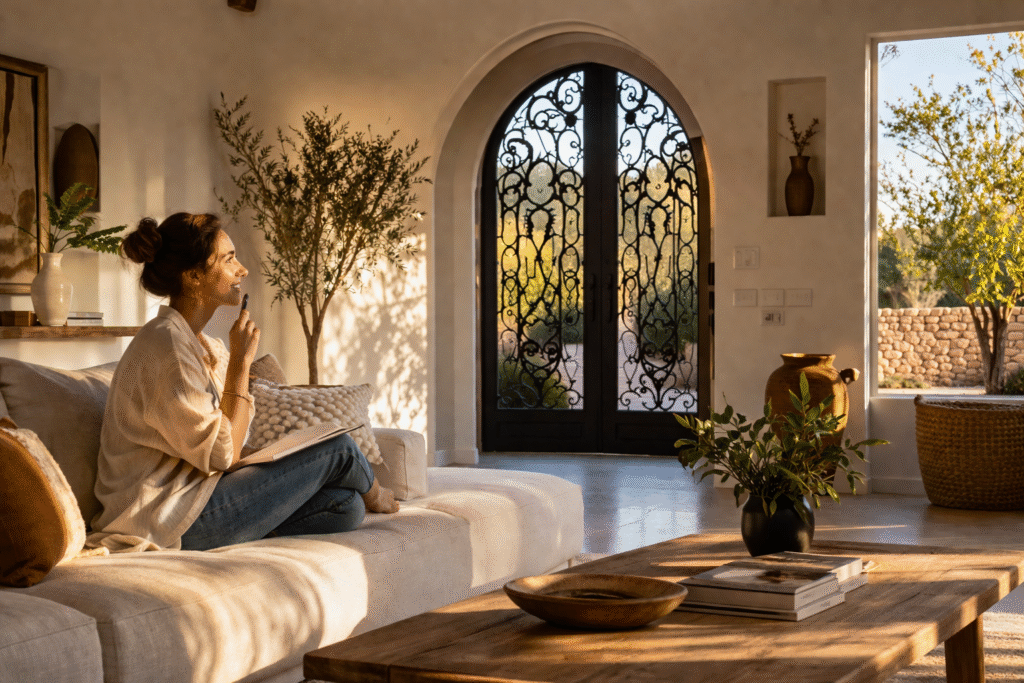
Traditional Homes Usually Work Well With More Detail
Traditional homes tend to offer a little more flexibility when it comes to decorative ironwork. If the exterior already includes classic elements like arches, shutters, stone accents, or symmetrical windows, the entry can often support a more detailed look without feeling too busy.
That is where decorative wrought iron doors often shine. Scrollwork, textured glass, soft curves, and layered iron details can complement homes with timeless or old-world influences. The key is making sure the ornament feels in proportion to the house. Too much detailing can make the front elevation feel crowded, while the right amount can make the whole exterior feel richer and more complete.
Traditional-style homes may pair especially well with:
- Arched door tops
- Warm dark finishes
- Frosted or textured glass
- Symmetrical iron patterns
- Moderate ornamental accents
A traditional home often benefits from a door that feels welcoming and elegant instead of stark or overly minimal.
Modern Homes Usually Need Cleaner Lines
Modern and contemporary homes usually call for more restraint. If the architecture relies on strong geometry, larger windows, smooth stucco, or minimal exterior detailing, the front door should support that simplicity.
In these cases, the best entry door is often one that uses straight lines, open visual balance, and a cleaner frame profile. It should still feel substantial, but not overly decorated. A simpler design often creates a stronger result because it respects the architecture instead of interrupting it.
This is also where iron entry doors can work beautifully when they are chosen with proportion in mind. A large, sleek iron door with understated glass can feel bold and refined at the same time. It brings structure to the entry without overwhelming the home.
For modern homes, it helps to look for:
- Straight or geometric iron patterns
- Minimal decorative elements
- Clear or lightly textured glass
- Slimmer visual profiles
- Finishes that coordinate with trim and hardware
A clean design can still make a statement. It just does it more quietly.
Southwest and Rustic Homes Benefit From Warmth and Character
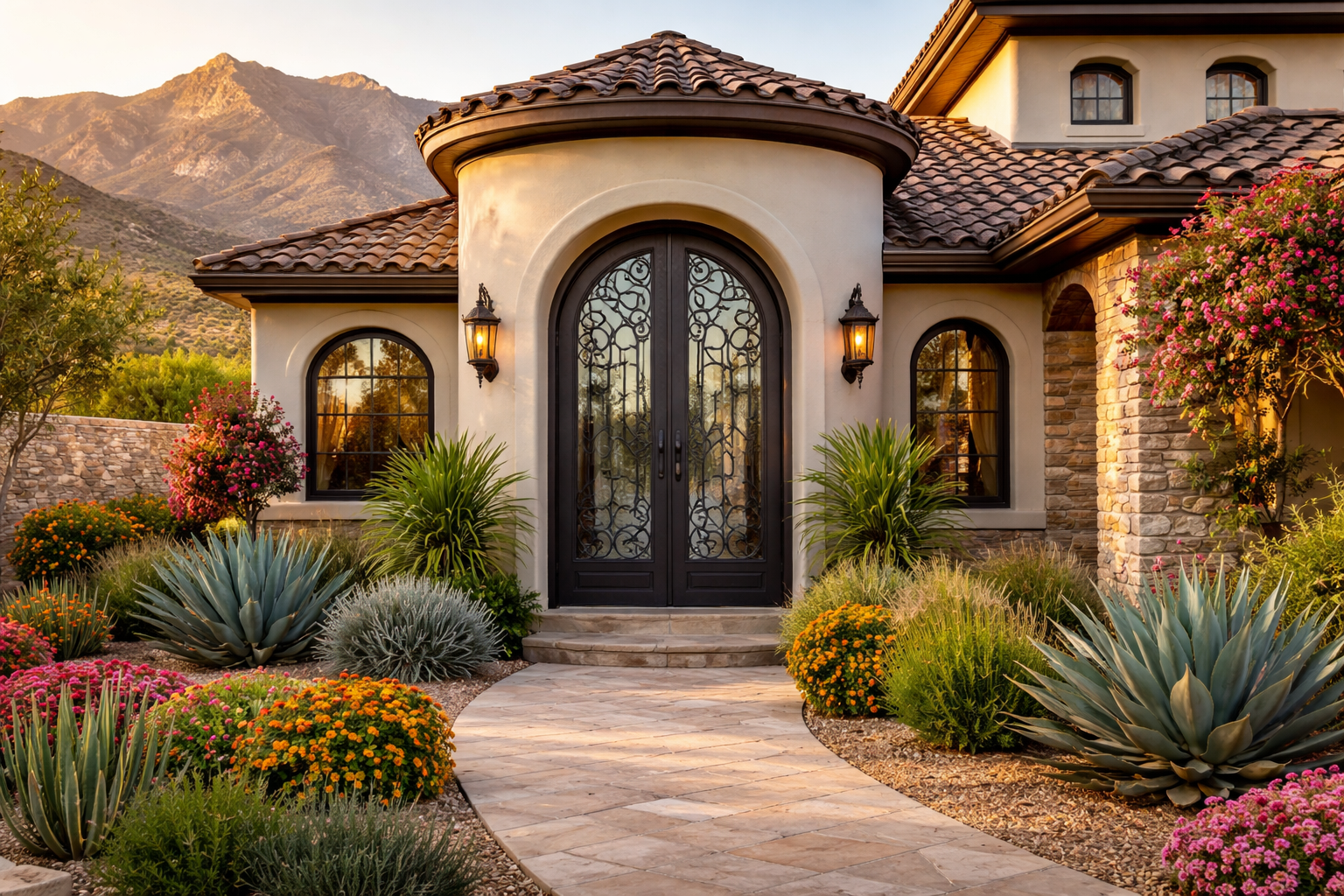
In El Paso, many homes have Southwest, Spanish-inspired, or rustic influences. These properties often feature stucco exteriors, earthy tones, arched entries, tile details, or natural stone. A wrought iron door can work especially well here because it naturally complements that kind of architecture.
The trick is choosing a design with enough warmth and character to fit the home. A door that is too plain may feel underwhelming, while one that is too ornate may feel disconnected from the relaxed strength of the exterior.
This is where homeowners often find that curb appeal iron doors make a real difference. The right entry can add visual depth and create a stronger focal point without requiring a full exterior remodel. It can make the home feel more finished from the street while still blending naturally into the regional style.
For Southwest or rustic homes, good design choices often include:
- Rich finishes with natural warmth
- Soft curves or subtle arch details
- Glass that filters light without feeling cold
- Ironwork with texture and personality
- A door frame that feels grounded and substantial
This kind of home usually responds well to craftsmanship that feels solid and authentic.
Do Not Forget the Scale of the Entryway
Even the right style can look wrong if the scale is off. A narrow or modest entrance can look overwhelmed by an overly heavy design, while a large entry can make a small, simple door feel underpowered. Matching the architecture means paying attention to proportion just as much as decorative style.
This is also one of the reasons homeowners look at secure front doors with more care than they used to. People want strength, but they do not want the entry to feel bulky or harsh. A secure door should feel substantial in a good way. It should support the home visually and functionally without making the entrance look stiff or overbuilt.
When checking scale, it helps to think about:
- The width and height of the entry opening
- Whether sidelights or transoms are present
- How prominent the front entry is from the street
- The visual weight of the surrounding materials
- How much detail the space can comfortably carry
A door should feel sized for the house, not just selected for impact.
Pay Attention to Color, Glass, and Hardware
A lot of homeowners focus mainly on the iron pattern, but smaller details often do just as much to determine whether the final look works. The finish should feel connected to the home’s palette. The glass should make sense for privacy, light, and style. The hardware should reinforce the overall tone instead of pulling it in another direction.
These details are where a good match either comes together or starts to fall apart.
A few things worth considering:
- Dark finishes can add contrast and formality
- Warmer tones often feel more natural with stone or earth-colored stucco
- Clear glass creates openness, while textured glass softens the look
- Simple hardware works better on modern homes
- More substantial handles can complement traditional or rustic entries
A cohesive entry is usually built through these quieter choices, not just the big design gesture.
Think About the Whole Front Elevation, Not Just the Door
A front door never exists in isolation. It sits within the full exterior of the house. That means the best decision usually comes from looking at the entire front elevation rather than choosing the door as a stand-alone feature.
Ask yourself how the door relates to the windows, the trim, the lighting, the walkway, and any iron elements already present around the property. If the home has railings, gates, or window details, the new entry should feel like part of the same visual language.
This bigger-picture approach often helps homeowners avoid choices that feel disconnected. It also leads to a result that looks more natural and more high-end, even when the design itself is not overly complicated.
A good front entry should do a few things at once:
- Fit the architecture
- Support the home’s color palette
- Feel welcoming and appropriately scaled
- Add character without overpowering the exterior
- Make the front of the house feel more complete
That is usually what separates a nice door from the right door.
The Best Choice Usually Feels Obvious Once It Fits
When a door matches the architecture well, something interesting happens. The decision starts to feel easier. Instead of wondering whether the design is too much, too plain, too trendy, or too generic, the right option just starts to make sense. It feels connected to the house. It feels like it belongs.
That is the real goal. Not choosing the fanciest door. Not choosing the boldest one. Choosing the one that makes your home look stronger, more cohesive, and more like itself.
Final Thoughts
Matching a wrought iron door to your home’s architecture is really about paying attention to what the house is already telling you. The lines, materials, proportions, and overall character of the exterior all help point toward the right choice. When the design fits naturally, the entry feels stronger, the home looks more polished, and the whole property benefits. A well-matched door does more than improve the entrance. It helps the entire home feel more balanced, more intentional, and more enjoyable to come home to.